Alert
Inside Ancient Egypt is an up-close look at the daily lives of ancient Egyptians—as well as how they thought about death.
The burial chamber, which dates to 2400 BC, houses one of the largest collections of mummies in the United States: 23 human mummies and more than 30 animal mummies.
Inside Ancient Egypt offers clues to ancient Egyptians’ lives on Earth—and to everything we may have in common with them.
Mummification Process
Ancient Egyptians mummified the dead because they believed the soul lived within the body even after death, so they meticulously preserved bodies to keep the spirit intact.
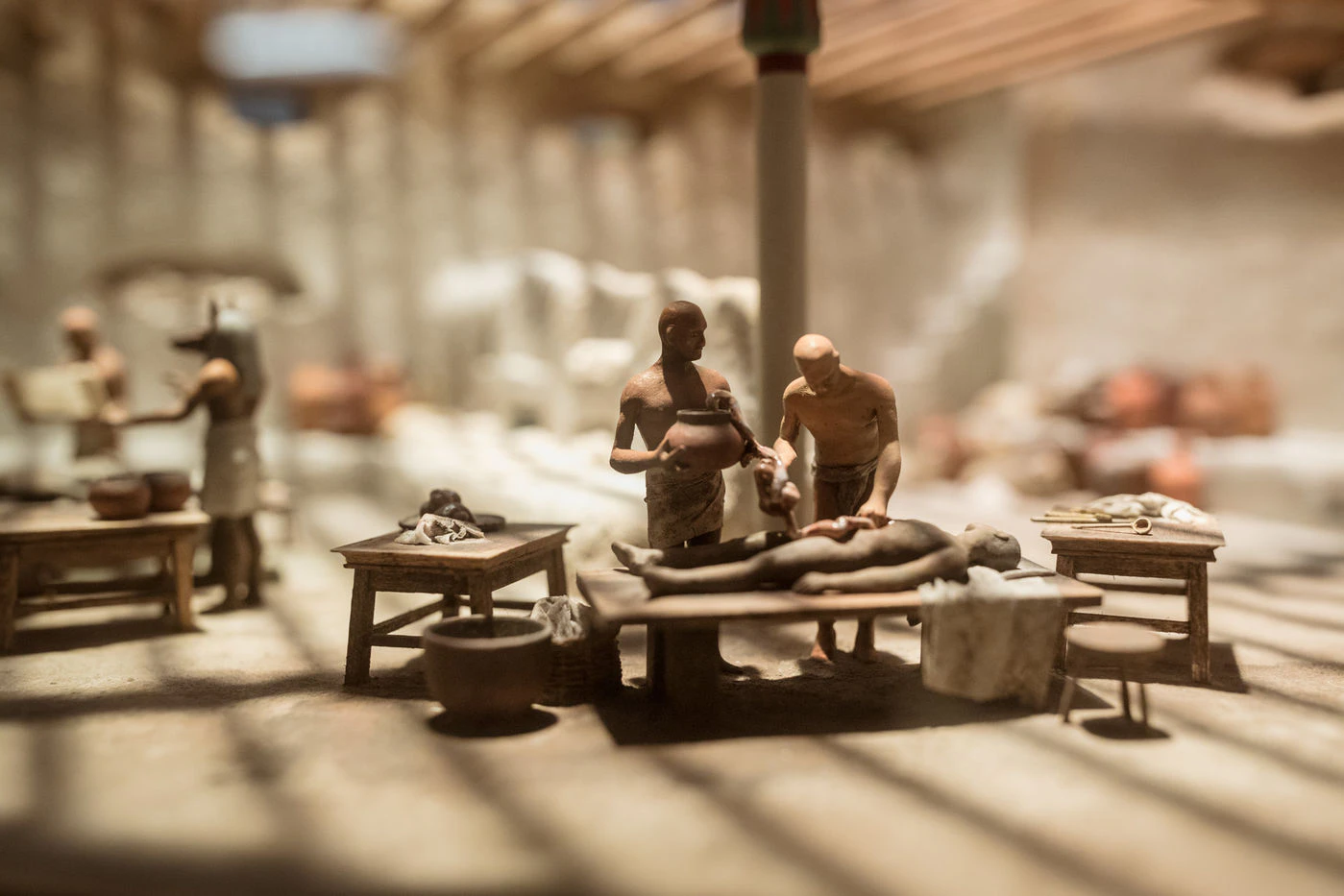
Along with the mummies and sarcophagi on display in Inside Ancient Egypt are dioramas that depict the 70-day process, an extensive ritual that required both spiritual and biological knowledge.
The process began by removing all internal organs that might decay rapidly—all but the heart, which was thought to house the soul. Using a salt called natron, embalmers dried out the body completely.
Then the body was wrapped in strips of linen. Sometimes embalmers would write prayers on the linen strips or include amulets within the wrappings to protect the dead along their journey.
After this delicate preservation process, the mummy was ready for the ceremonial burial that would usher its former host to the afterlife.