


Cultures of Mesoamerica and Central America
The Field Museum boasts an impressive collection of artifacts from Mesoamerica and Central America, featuring numerous interesting archaeological and cultural items that make a striking display. Some of these items originate from research conducted by renowned archaeologists, such as J. Eric Thompson, and there are also collections assembled by prominent cultural anthropologists. Parts of this collection have even been lent to well-known places like the Guggenheim and the Art Institute of Chicago.
One particularly fascinating piece in the collection is a Maya incense bowl discovered in the Cenote of Sacrifice at Chichen Itza. Scientists studied this bowl to gain a deeper understanding of how the Maya created the renowned Maya Blue pigment. Their research was published in a journal called Antiquity in 2008. This discovery was so impressive that Archaeology magazine named it the best archaeological discovery of that year, and USA Today included it in their list of the top ten scientific discoveries of the year!
Use of Collection
Some items in the Field Museum collections are available to loan for exhibition, research, or education in support of our mission: fighting climate change, preserving biodiversity, celebrating cultures, and championing science.


Mesoamerican Research
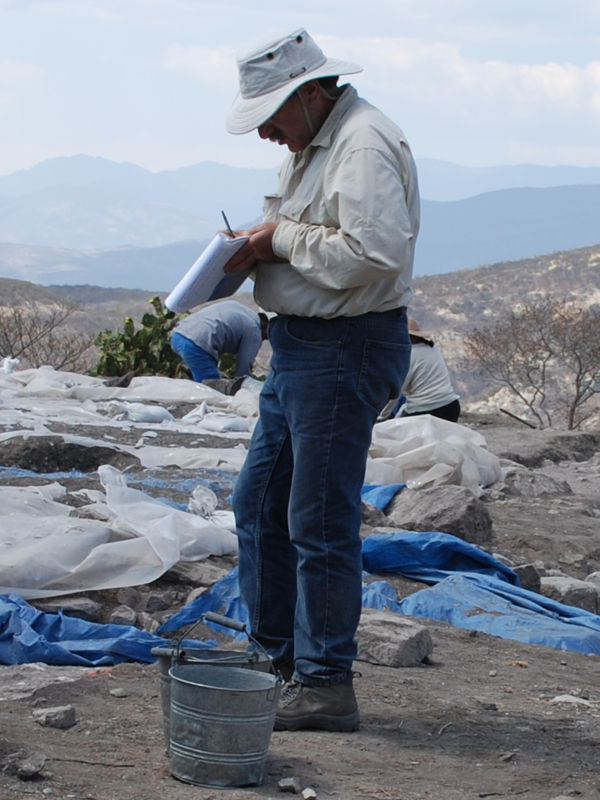
Excavations at Lambityeco (Oaxaca, Mexico) were led by Dr. Gary M. Feinman and Dr. Linda Nicholas over four seasons, building on previous work conducted at Ejutla, El Palmillo, and the Mitla Fortress. The primary focus of this research initially was on domestic contexts, aiming to explore the economy during the Classic period in the Valley of Oaxaca. The study also examined civic-ceremonial contexts, yielding a new perspective on the functioning and eventual collapse of the Classic-period polity centered at Monte Albán, as well as the reorganization of the region during the later Postclassic period.
Overall, this research specifically investigated how people earned a living and organized themselves in nucleated settlements, such as Lambityeco, Ejutla, the Mitla Fortress, and El Palmillo, all of which are situated in semi-arid environments. The household archaeology research was part of a broader effort to understand the economic and political organization of prehispanic Mesoamerica, with a focus on the highland Valley of Oaxaca.
Related Areas


Search the Anthropology Collections
Our Staff
Projects
Repatriation, Provenance Research & Tribal Relations
The Field Museum is working to reunite important cultural items and human remains with their descendants and descendant communities in North America and around the world.


