


Southern Amazonian birds and their symbionts
Principal Investigators Jason Weckstein and John Bates of the Field Museum, Vasyl Tkach of the University of North Dakota, Alexandre Aleixo of the Museu Paraense Emílio Goeldi and several other parasitologists from the USA, Brazil, Bulgaria, and Ukraine have been funded by the National Science Foundation's Biodiversity and Discovery and Analysis Program (DEB-01120054 and DEB-1120734) to conduct collaborative biodiversity surveys to study, describe, and archive parasites associated with birds in five geographically isolated regions (areas of endemism) of southern Amazonian Brazil. The research will involve collection and deposition of museum specimens for research and will use both physical characteristics and genetic data from both the birds and their parasites to describe this poorly known segment of biological diversity in the world’s richest ecosystem.
At over 6.5 million km2, Amazonia is estimated to harbor more than one tenth of the world’s species. Brazilian Amazonia harbors the most diverse bird fauna on earth (~1300 species), yet the parasite fauna of Amazonian birds is almost completely unstudied. Parasites are incredibly diverse and make up 30-70% of life on earth. This international collaboration will provide an unprecedented opportunity to document these groups of organisms and build collections and capacity to understand their diversity through research now and into the future.
This project has a number of important societal benefits. First, this work fosters international collaboration between US and Brazilian researchers and students, who will travel between these institutions to teach, learn, work, and collaborate to further the understanding of birds and their parasites. Training of a diverse pool (including underrepresented groups) of US and Brazilian graduate and undergraduate students will augment the diminishing pool of expertise working on understudied parasite groups. This study also will have long-term value because parasites are known to have important consequences on the health, behavior, demography, and evolution of their hosts (including humans and other animals). Parasites are known to cause or spread disease among and between hosts. Thus, through modern cutting edge approaches to gathering, archiving, and studying the material collected, this project will make substantial lasting contributions to our knowledge of the diversity, distribution, and evolutionary history, of avian parasites in Amazonia, and therefore will have important human and wildlife health implications far into the future. Lastly, this research is a novel collaborative effort to gather data needed to conserve the biodiversity of the Amazon, the richest fauna on earth.
Additional Resources:
The Field Museum's Vertebrate Ectoparasites Collections
Expeditions
We are currently studying collections of avian parasites and birds made during two trips to Amazonian Brazil in 2007 and are planning future expeditions to comprehensively study the avian parasite fauna in southern Amazonia. The menu above includes links to pages with photo galleries from Amazonian expeditions where we collected specimens of both birds and their associated parasites. We will add additional pages as we complete new expeditions.
2007 Caxiuanã Expedition
From 9-29 January 2007, PIs Jason Weckstein (Staff Scientist, FMNH Bird Division), John Bates (Associate Curator, FMNH Bird Division and Alexandre Aleixo (Curator of Birds, Museu Paraense Emílio Goeldi [MPEG]), MPEG graduate students Elinete Rodrigues and Maya S. Faccio, and MPEG technician Nilton Santa Brígida conducted a joint expedition to study birds and their parasitesin the Caxiuanã National Forest, Pará, Brazil. The expedition was sponsored by the Brazilian Ministry of Science Programa de Pesquisa em Biodiversidade (Program for Planned Biovidersity Studies, PPBIO). The MPEG/Field Museum team surveyed and collected specimens of birds and their ectoparasites in a 5000-hectare plot in the Caxiuanã National Forest in the eastern Amazon, one of several research plots recently constructed by the PPBIO program in Amazonian Brazil. The main goal of the PPBIO program is to conduct integrated studies of biodiversity over large areas and to provide meaningful long-term data, while at the same time encouraging collections development, research, and human capacity building. Specimens collected on this expedition are being used for several collaborative research projects being conducted under our NSF Biodiversity Discovery and Analysis project, Southern Amazonian birds and their symbionts: Biodiversity and endemicity of parasites from the most diverse avifauna on Earth.


2007 Rio Japurá Expedition
From 5 July - 5 August 2007, PIs Jason Weckstein (Staff Scientist, FMNH Bird Division), John Bates (Associate Curator, FMNH Bird Division and Alexandre Aleixo (Curator of Birds, Museu Paraense Emílio Goeldi [MPEG]), MPEG graduate students Elinete Rodrigues and Maya S. Faccio, Marcos Pérsio (Professor, Universidade Federal do Piauí [now Universidade do Pará]), and MPEG technicians Nilton Santa Brígida and Manoel Santa Brígida conducted a joint expedition to study birds and their parasites along the Rio Japurá in Amazonas, Brazil.
The MPEG/Field Museum team with support from the Field Museum’s Collections Fund and a National Science Foundation Grant surveyed and collected specimens of birds and their ectoparasites on both banks of the Rio Japurá, Amazonas state. Specimens from the Rio Japurá region are particularly important for understanding Amazonian biodiversity because two major areas of Amazonian endemism, the Napo and Imerí, meet along its banks. Furthermore, little ornithological and no parasitological work has been done along the banks of the Rio Japurá, making the specimens collected by the MPEG/Field Museum team particularly important for biodiversity studies. The expedition was extremely productive and included over 430 ectoparasite samples collected from 866 birds of over 200 species. Many of the lice are new species and some have now been described (see Outputs: Publications above) by collaborator Michel Valim and PI Weckstein. We are continuing to study specimens collected on this expedition and they will benefit several collaborative research projects being conducted by the PIs and collaborators under our NSF Biodiversity Discover and Analysis project, Southern Amazonian birds and their symbionts: Biodiversity and endemicity of parasites from the most diverse avifauna on Earth. PI Vasyl Tkach (Associate Professor, University of North Dakota) is leading a study of nematodes collected from the eyes of birds on this and other Amazonian expeditions.

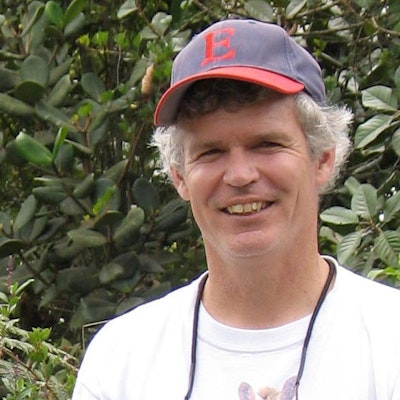
Southern Amazonian birds team
Introducing the principle investigators, collaborators, trainees and other participants in NSF DEB-1120054, Southern Amazonian birds and their symbionts: Biodiversity and endemicity of parasites from the most diverse avifauna on Earth.
Jason Weckstein and John Bates of the Field Museum, Vasyl Tkach of the Uniersity of North Dakota, Alexandre Aleixo Museu Paraense Emílio Goeldi and several other parasitologiest from the USA, Brazil, Bulgaria and Ukraine.
Field Museum's Bird Collection


Project Output


Acknowledgments
This project has been funded by the National Science Foundation's Biodiversity and Discovery and Analysis Program (DEB-01120054 and DEB-1120734)

