


North American Collections
The Field Museum’s North American Anthropology collections are among the largest in the world. Drawing from North American items collected for the 1893 World’s Columbian Exposition in Chicago, the collections have since grown to include over 70,000 historic items and 700,000 archaeological items representing more than 300 North American Indigenous communities. The largest collections areas include items from communities in the Arctic, Pacific Northwest, Great Plains, Great Lakes, and American Southwest. In addition to archaeological and historic items, the North American Anthropology collections include a growing number of works by contemporary Indigenous artists.
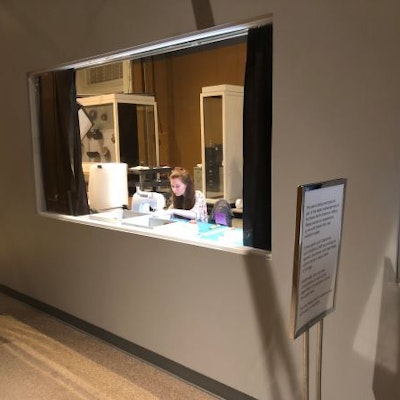
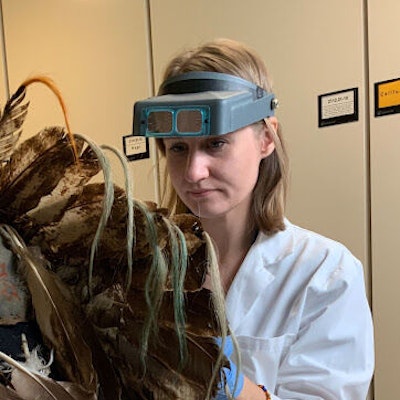
All of these cultural belongings are intertwined with the deep histories, enduring traditions, and living identities of their creators and the communities to which they belong today. Museum staff actively collaborates with Indigenous tribes and communities to ensure culturally-informed stewardship and care of the collections, and to facilitate ethical research with prior informed consent from affiliated communities. These collections serve as an invaluable resource not only for scholars but also for descendant communities seeking to connect with their cultural heritage.
Arctic and Sub-Arctic
The Museum's Arctic and Sub-Arctic collections provide a rich insight into the diverse lifeways of the peoples inhabiting these dynamic environments. This collection features a range of items, including hunting and fishing equipment, clothing, and ceremonial objects from various communities in Alaska, Canada, Greenland, and Siberia. These cultural materials, accompanied by photographs, field notes, and traditional knowledge, collectively document the cultural heritage of Indigenous communities in the Far North from the late 19th century to the present. Particularly significant are the archaeological materials excavated from sites in the Aleutian Islands and southwestern Alaska.
Pacific Northwest
Collections from the Pacific Northwest include hunting and fishing paraphernalia, clothing, carvings, and ceremonial objects from groups such as Salish, Haida, and Tlingit. In collaboration with hereditary chief and master carver Xi'xa'niyus (Bob Harris) and Kwakwaka'wakw cultural historian Charlie Nowell, the Kwakwaka'wakw collections are among the most extensively documented at the Field Museum. Acquired during the Canadian Potlatch ban, many of the collections from the Pacific Northwest have been studied by community artists and cultural knowledge keepers as a means of cultural revitalization.
Great Plains
Much of the material culture of groups in the Plains region was collected around the turn of the 20th century. These collections reflect enduring aesthetic traditions and long histories of migration and intercultural exchange of Indigenous peoples across the heartland of North America. A large portion of the collections represents Plains Cree, Cheyenne, Arapaho, Sioux, and Crow nations.
The collection from the Pawnee Nation was assembled by James Murie, an anthropologist of Pawnee descent, along with Field Museum Curator George Dorsey. This collection includes artistic and utilitarian items associated with religious and oral traditions, linguistic texts, and written records of Pawnee religion and social organization. As of 2023, the Museum has entered into a Memorandum of Understanding with the Pawnee Nation Cultural Resources Division that allows for the collaborative long-term care, access, and display of important Pawnee cultural material.
Southwest
The Southwestcollections include historical ceramics, textiles (blankets, sashes, dresses, and kilts), agricultural implements, kachina dolls, and other art from Indigenous communities. Archaeological material from this region has been the subject of extensive publication in academic journals. Highlights include works made by matriarchs of the southwestern pottery revival, including Nampeyo, Lucy Lewis, and Maria Martinez, as well as other works by contemporary artists.
NAGPRA
The passage of the Native American Graves Protection and Repatriation Act in 1990, along with its regulatory updates in 2024, have reinforced updated procedures for the care, access, and display of collections at the Field Museum. Indigenous community knowledge is recognized as essential to shaping the scope of Native American collections and will continue to inform ethical collecting practices.
Related Areas
Image slideshow


Screen reader users can skip the following slideshow buttons by using heading navigation. All slides have been displayed above.
Repatriation
The Field Museum is working to reunite important cultural items and human remains with their descendants and descendant communities in North America and around the world.


Land Acknowledgement
The Field Museum is built on the traditional homelands of the Council of the Three Fires: the Odawa, Ojibwe, and Potawatomi Nations. Many other Native Nations, including the Ho-Chunk, Miami, and Sac and Fox, have also known this area as home. The Museum recognizes that the region we now call Chicago was and is an important hub of trade, worship, and community for many Indigenous Nations, and continues to be home to diverse Native peoples today. We acknowledge this ongoing relationship and the significant contributions of Native peoples to the development and endurance of this region. The Field Museum commits to honor and respect this history and heritage in the fulfillment of our Mission, Strategic Objectives, and Core Values. The land we walk was and remains Native land.
Our Staff
Image slideshow




Screen reader users can skip the following slideshow buttons by using heading navigation. All slides have been displayed above.